
Nutrition and Mental Health
The Root of Wellness® Newsletter
Georganne Backman Garfinkel, FMCHC, NBC-HWC
Functional Medicine Certified Health Coach, National Board Certified-Health & Wellness Coach
Welcome to The Root of Wellness® Newsletter
For the past twenty years I have been working one-on-one with clients and teaching classes in the field of Functional Medicine. One of my greatest pleasures is sharing the most impactful cutting edge information in the rapidly changing field of health. Positive and sustainable changes have been possible for many based on this information. I'm starting this newsletter as a way to share the current information with a wider audience. Every month or so, I'll send a newsletter that includes current research in functional medicine, a few actionable steps, and a delicious recipe. This month, the focus is on nutrition and mental health. I hope you enjoy.
Nutrition and Mental Health
A growing field called nutritional psychiatry focuses not just on symptoms of mental health, but on how diet and lifestyle have a direct effect on mood and brain function. I talk about food and mood with almost every client. The three experts below reach the same conclusion, what you eat, how you sleep, move, and deal with stress matters to your mental health.
James Greenblatt, MD
Dr. Greenblatt, a functional psychiatrist, has spent decades studying the root causes of depression. His new book makes the case that deficiencies in nutrients like magnesium, zinc, B12, vitamin D, iron, and omega-3s are common, underdiagnosed, and often at the root of mood disorders.
He says that "Research has been loud and clear for decades: nutrition plays a pivotal role in brain health. By addressing nutritional imbalances, we can significantly influence mental health outcomes."
Finally Hopeful: The Personalized, Whole-Body Plan to Find and Fix the Root Causes of Your Depression
Rhonda Patrick, PhD
Dr. Patrick is a top researcher and has a great podcast where she interviews other top health and wellness experts. I have been on a monthly conference call with her for over 10 years and rely on her for the best nutritional and lifestyle information.
A few things she keeps coming back to: omega-3 fatty acids (specifically EPA) have strong evidence for reducing depression and anxiety. Vitamin D deficiency, which occurs in over 70% of the population, is directly linked to mood. Magnesium is involved in over 300 enzymatic processes including the ones that regulate stress. And BDNF, the brain's growth factor, is raised significantly by both exercise and certain foods.
Mark Hyman, MD
Dr. Hyman's research shows that ultra-processed foods, refined sugar, and industrial seed oils promote inflammation, and brain inflammation is increasingly linked to depression and anxiety. His approach is to crowd out the bad with the good: whole foods, healthy fats, plenty of plants, and quality protein.
His book, The Ultra Mind Solution, written twenty years ago, was way ahead of his time. His podcast, The Doctor's Farmacy, is worth checking out as well.
The Ultra Mind Solution: Fix your broken brain by healing your body first.
drhyman.com | Listen to the podcast
Three Things to Try

1. Walk outside for 20 minutes
Within 1 hour of rising is especially important for setting your biological clock, but any time of day is beneficial.
Twenty minutes of walking has a real, measurable effect on mood. It raises BDNF, the brain's growth factor, which supports brain cell growth and resilience. Studies put it on par, or even superior, to antidepressants for mild to moderate depression.
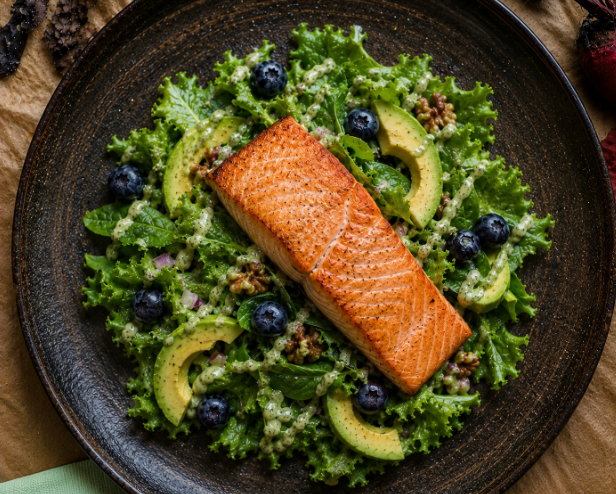
2. Make this wild salmon bowl for dinner
Simple Baked Wild Salmon:
Center cut, skin-on wild salmon. Thoroughly dry salmon with paper towels (helps the outside get a slightly golden finish rather than steaming). Place on a parchment-lined baking sheet. Preheat your oven to 400°F. Line a baking sheet with parchment paper. Place the salmon skin-side down on the parchment-lined pan. Rub salmon with extra virgin olive oil. Lightly season with sea salt and pepper. Bake at 400°F for 12–15 minutes depending upon thickness, until the salmon flakes easily with a fork. The center should look just opaque and slightly glossy. Let rest for 2-3 minutes then place on top of salad. Drizzle with avocado dressing.
Creamy Avocado Dressing:
Blend 1 ripe avocado, 3 Tb lime juice, 1 clove garlic, 3 Tb extra virgin olive oil, 3 Tb water (or more), 1 tsp Dijon mustard, 1/4 cup fresh cilantro leaves or parsley (if desired), sea salt and pepper to taste.
This dish incorporates many of the brain nutrients all at once. Include fatty fish 3 times a week.
- Wild salmon: omega-3s, B12, vitamin D
- Spinach or arugula: folate, magnesium, fiber
- Walnuts: omega-3, fiber, magnesium, folate, zinc
- Blueberries: among the highest antioxidant content of any fruit, calms brain inflammation
- Sauerkraut (raw, unpasteurized): packed with live probiotics. A healthier gut can support better mood, reduced anxiety, and sharper cognitive function.
- Avocado: healthy fats, B vitamins
- Extra virgin olive oil and lime: heart-healthy fats, powerful antioxidants, vitamin C, anti-inflammatory

3. The physiological sigh
Andrew Huberman, MD, of Stanford University, calls the physiological sigh, or cyclic sigh, the fastest way to calm your nervous system in real time. Two inhales through the nose, a big one, then a quick second inhale to top off the lungs, followed by a long, slow exhale through the mouth with an audible sigh.
Do it a few times when you feel your stress spike. Or do it for five minutes and feel the calm. It also can help get you to sleep, and help you get back to sleep if you wake up during the night.
Until Next Time
Feel free to pass this newsletter along. If there's a health topic you would like me to cover in a future issue, you can reach me at info@therootofwellness.com.
If someone forwarded this newsletter to you, press here to sign up.
Please note, the information here is for educational purposes only. Do not make any changes to your medications or supplements except under the guidance of your medical practitioner.
Be well,
Georganne
The Root of Wellness®
575 Lexington Ave. 14th Fl, New York, NY 10022
therootofwellness.com | info@therootofwellness.com
